
Why Your Smart ForTwo Won’t Charge: What MBI Found
When a Smart ForTwo stops accepting a charge, it’s often a communication problem between the control units rather than a dead battery. We’ve fixed quite a few of these, and most of the time the issue can be traced to a broken wire somewhere in the charging system. In this case, we found an open circuit in the charging harness between connectors X58/23 and N83/5 that was blocking the charging signals from reaching the battery management system. We replaced the damaged wiring with factory parts, cleared the fault code P07A023, and ran a full system check. The vehicle charged normally again after one service visit.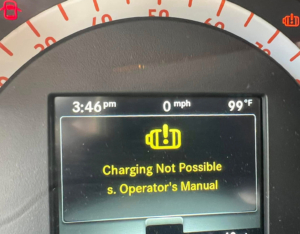
- Issue: The vehicle looked ready to charge but wouldn’t actually accept power
- Root Cause: A broken wire in the charging harness between connectors X58/23 and N83/5 appeared to be keeping the control modules from communicating with each other
- What Happened: The disruption may have triggered a safety lockout that blocked charging until the wiring was repaired
- What We Did: Replaced the damaged wiring with factory parts and verified the system was working again
- Where: MBI Motors in Portland
- Result: The vehicle charged normally again after one service visit
Is Your Smart ForTwo Refusing to Charge?
One of the most frustrating problems with an EV is when it looks like it’s ready to charge but just won’t take any power. Your Smart ForTwo might seem fine mechanically, but nothing happens when you plug it in. There’s no obvious warning, no broken parts you can see.
You might notice:
- The vehicle acts like it’s ready to charge, but no power flows into the battery
- Warning lights pop up on the dashboard related to charging or the high-voltage control system
- The charging port works fine and accepts the connector, but the car won’t start the charging sequence
- The control modules stop communicating with the charging system, triggering safety shutdowns
This usually points to a communication problem between your vehicle’s high-voltage control units rather than a battery issue. If you see these signs, get the vehicle checked by a certified technician within a couple of days. Trying to charge repeatedly when there’s a communication failure can hide the real problem and potentially damage your EV’s electrical systems.
How We Diagnosed the Charging Problem
We ran a thorough inspection of the high-voltage system using advanced OBD-II scanning equipment and specialized EV diagnostic tools. We pulled multiple Diagnostic Trouble Codes from several control units, which told us that the high-voltage modules couldn’t communicate with the charging system. This pointed to a communication pathway failure rather than a single broken part.
The real answer came when we physically inspected the charging harness. We found an open circuit in the charging harness between connectors X58/23 and N83/5. This break likely kept the charging control modules from sending the signals needed to start and maintain charging. The battery management system, high-voltage control units, and charging modules all depend on this pathway to work together. Even though the vehicle looked ready to charge, this broken connection may have triggered a safety lockout to prevent unsafe charging. We pinpointed the problem fairly quickly, so we could go straight to fixing it instead of guessing.
How We Fixed Your Smart ForTwo’s Charging System
- Scanned the vehicle with advanced OBD-II equipment to pull all Diagnostic Trouble Codes from the high-voltage control modules, confirming that the communication pathway between connectors X58/23 and N83/5 was damaged and needed to be replaced.
- Physically inspected the charging harness and found the open circuit that was blocking signals between the battery management system and the charging modules.
- Removed the damaged wiring and installed factory-specification harness components to restore proper electrical continuity, making sure the connectors matched factory specs and seated properly to avoid any contact issues down the road.
- Cleared the fault codes and ran comprehensive system verification tests, checking multiple times that the charging control modules could communicate properly and that all the safety systems were working as they should.
- Ran a full charging system initialization to confirm the vehicle would accept power into the battery and that fault code P07A023 was gone for good.
- Completed a final road test and inspection, confirming the vehicle was working correctly and safe to drive with full charging capability.
Common Questions About Smart ForTwo EV Charging Problems
What should I do if my Smart ForTwo won’t charge?
Get it to a certified technician who knows Smart ForTwo repair right away. Our technicians have specialized training and certification in hybrid and electric vehicle systems. Communication failures between control modules can prevent safe charging and cause more damage if you ignore them. Don’t keep trying to charge it, because that can mask the real electrical problem and create more fault codes. You need professional diagnostics to figure out whether it’s a harness issue, a connector problem, or a control module failure.
How does the high-voltage control system affect charging?
The high-voltage control units communicate through dedicated wiring and connectors that send critical signals for charging startup, power management, and safety. These pathways are essential for your vehicle’s safety systems to allow power into the battery pack. Any break in these pathways, like an open circuit in the charging harness, can stop the charging system from working even if everything else looks fine. This design helps protect your vehicle by reducing the risk of unsafe charging situations.
What happens during a charging system diagnostic?
We start by scanning your vehicle with advanced OBD-II equipment to pull all Diagnostic Trouble Codes from the high-voltage control modules. Then we do a detailed physical inspection of the charging harness and connectors to find any open circuits or damage. If the harness needs replacement, we install factory-specification parts and run system verification tests, which can take additional time depending on how much damage there is. Finally, we do a full charging system initialization and road test to make sure the problem is solved. Most Smart ForTwo charging diagnostics and repairs can often be completed in a single visit.
Is it safe to work on EV charging systems myself?
We don’t recommend it. High-voltage systems in electric vehicles are dangerous and require specialized training and equipment. Don’t try DIY diagnostics or repairs on EV charging systems, including inspecting harnesses, testing connectors, or clearing fault codes. Always use a certified technician with proper training, equipment, and safety protocols. Our technicians maintain current certification in high-voltage system safety and use insulated tools rated for high-voltage work. Professional service protects you and your vehicle from electrical hazards and makes sure repairs meet manufacturer standards.
Get Your Smart ForTwo Charging Again
Your Smart ForTwo deserves expert care from someone who knows these systems. Our certified technicians specialize in Smart ForTwo repair and EV charging diagnostics with years of experience on premium electric vehicles. We’ve successfully fixed many Smart ForTwo charging failures. Call us at 503-231-0444 to schedule your diagnostic.


